
Choosing an accounting path in Russia can feel like picking a train route in a huge station. The signs are there, but the best platform depends on where you’re going. Russia has strong local accounting rules and reporting duties, yet many employers still ask for IFRS skills and globally recognised credentials, especially in groups that report to international owners or work with overseas lenders.
This guide lays out the top accounting qualifications and course routes you can take in Russia in 2026. You’ll see the most recognised professional options (including ACCA and Russia-focused certification routes), plus strong university degree pathways in Moscow and St Petersburg. You’ll also learn who each route suits, and how to choose based on your goal: building a career in Russia, working with international firms, or preparing to move abroad.
First, decide what you want your qualification to do for you
“Top” doesn’t mean “best for everyone”. The right accounting qualification in Russia depends on four practical factors: career direction, time, language, and where you plan to work.
Start with geography. If you want to stay in Russia long term, employers often value proof that you can handle local reporting, tax workflows, and compliance. A Russia-focused qualification or a solid Russian university degree can carry real weight, especially in SMEs and in-house roles.
If you want roles tied to international reporting, IFRS-heavy work, or multinational employers, you’ll need to think differently. International qualifications can help, but in 2026 there are real delivery issues. Public information indicates that ACCA exam availability for candidates based in Russia has been restricted, and options may involve sitting exams outside Russia (for example in nearby countries). Policies change, so you must check current exam access before you commit time and money.
Next, think about the job you want. Audit, financial reporting, management accounting, and corporate finance overlap, but they reward different strengths. Audit is detail and evidence. Management accounting is planning and decisions. Financial reporting is rules and judgement. Finance roles often ask for modelling and business partnering.
Then decide what “qualification” means for you:
- A university degree builds foundations and gives structured teaching, internships, and signalling for graduate jobs.
- A professional qualification proves job-ready capability and can be done while working.
- A short course (IFRS, audit practice, internal control) can be a fast add-on, but it won’t replace a full credential.
Finally, be honest about language. Many Russian university programmes teach in Russian. Most global exams are in English, though some offer Russian-language support or Russian-language diplomas. Language isn’t just a barrier, it’s a study load. Treat it like one.
Quick checklist: the 6 questions that make the choice easier
- Where do I want to work (Russia only, Russia plus international groups, or abroad)?
- What role do I want (audit, reporting, management accounting, finance)?
- Do I need IFRS for the jobs I’m targeting?
- Do I need a master’s degree for recruitment or visa plans?
- How strong is my English for study and exams?
- How much time and money can I invest over the next 12 to 36 months?
Top professional accounting qualifications you can take in Russia
Professional qualifications can act like a passport. They don’t guarantee a job, but they make it easier for employers to trust your skills without guessing what you’ve studied.
The challenge in Russia in 2026 is access. Several international bodies and providers reduced services after 2022, and some exam delivery routes have changed. That doesn’t mean international study has no value, it means you should choose a route with a clear, workable plan for tuition, exam sitting, and proof of progress.
ACCA in Russia: the most recognised international route for ambitious careers
ACCA is widely known because it covers a broad set of accounting and finance skills: financial reporting, performance management, financial management, audit and assurance, corporate law, strategy, and professional ethics. It’s designed for people who want strong technical depth plus commercial thinking.
A good starting point is understanding the pathway and structure before you spend on tuition. This Comprehensive guide to the ACCA qualification gives a clear overview of how ACCA is built and what the exams cover.
In Russia, many learners choose ACCA because it helps in:
- IFRS-facing roles (group reporting, consolidation support, reporting packs)
- audit and advisory career tracks
- multinational companies that need consistent finance standards across countries
- long-term relocation plans
Practical reality check for 2026: public updates indicate that exam availability in Russia itself is limited, and candidates may need to use permitted exam centres outside the country. Remote exam rules have also shifted over time. Don’t assume you can sit everything from home. Before you register, confirm your exam sitting options, travel costs, and timing.
Best for: people aiming for Big Four style work, multinationals, IFRS-heavy reporting, or cross-border careers.
Who should choose ACCA If you’re early in your career and want a credential that travels, ACCA is a strong bet, provided you can access exams. If you already work in finance and need a recognised framework to move into reporting or audit, ACCA gives you a structured ladder. It’s also a good match if you like clear standards and exam-driven progress.
ACCA isn’t “quick”, though. The volume is real. If you want a candid view of the workload, use this piece on Assessing the difficulty of the ACCA qualification to plan your study time with open eyes.
IPAR certification: a Russia-focused option for local employer recognition
If your goal is to build a long-term career inside Russia, it can make sense to look at Russia-based professional routes. One option many candidates consider is certification linked to professional associations such as the Institute of Professional Accountants of Russia (often shortened to IPAR).
What makes a local professional credential attractive is its fit with day-to-day employer needs: compliance calendars, local reporting routines, and practical accounting work in Russian. In many organisations, credibility comes from showing you understand local rules and can keep the business safe and organised.
Because public English-language detail can be limited and pathways can change, treat IPAR as a route to research carefully. Check entry requirements, assessment format, and ongoing learning expectations before you commit. If you’re comparing routes, ask employers in your target sector which local credentials they actually recognise.
Best for: accountants planning to stay in Russia, in-house finance teams, SMEs, and compliance-led roles where Russian reporting knowledge is central.
Short IFRS and audit courses as add-ons (when a full qualification isn’t realistic)
Not everyone needs a full professional qualification right now. Sometimes you need one missing piece, like IFRS basics for a new reporting job, or audit practice for a move into assurance.
A short course can help when:
- you’re switching from bookkeeping to reporting support
- your employer wants IFRS understanding but not a full credential yet
- you need CPD-style learning to keep skills current
Treat these courses like a sharp tool, not a whole toolbox. They work best when paired with either a degree or a recognised professional pathway.
Best university accounting degrees in Russia and what each is known for
A university degree still matters in accounting. It gives you foundations, structured assessment, and a recognised signal for graduate recruitment. It also gives you time to build habits that matter in real finance work: careful reading, clear writing, and disciplined checking. Think of it like learning to drive in different weather, not just passing the test.
Russia has several well-known universities where accounting, audit, and finance are strong. Programmes vary, some are heavily focused on Russian standards, others connect more clearly to international tracks like ACCA and IFRS.
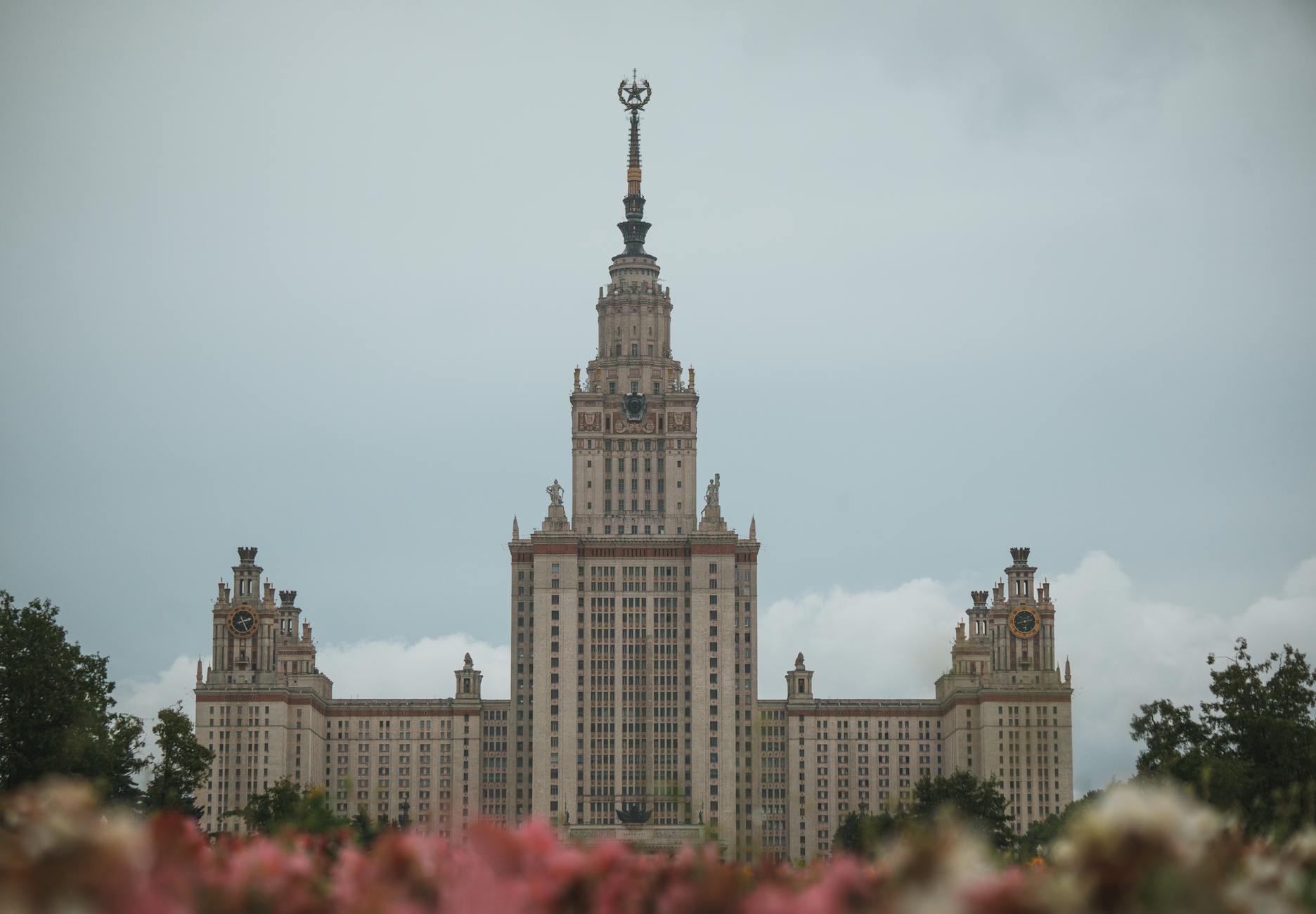
Photo by Антон Злобин
Here are practical snapshots you can use when shortlisting.
St Petersburg State University (SPbU)
SPbU is a standout choice for students who want a strong academic base plus international alignment. Public programme information highlights a master’s track in Accounting, Analysis, Audit, and it has been listed as ACCA accredited until the end of 2026.
Who it suits: students aiming for audit, financial analysis, or reporting roles in larger firms.
Good next step: pair your degree with ACCA planning, or IFRS-focused study if you want reporting roles.
RUDN University (Peoples’ Friendship University of Russia)
RUDN has published master’s programme detail in areas such as Accounting, Internal Control, and Audit. Reported modules include practical IFRS learning, management accounting, and audit practice, with master classes and case-based teaching linked to major firms (historically including Big Four brands).
Who it suits: people who want a structured audit and control route, with practical classroom work.
Good next step: add targeted IFRS revision, and build Excel and presentation skills for interviews.
HSE University (Higher School of Economics)
HSE is known for strong economics, business, and finance education, with a focus on analysis and decision-making. For accounting students, that often means a stronger quantitative base and better preparation for planning and finance roles, not only bookkeeping-style work.
Who it suits: students who enjoy analytical tasks and want flexibility across finance and accounting.
Good next step: add financial reporting practice and consider professional exams once employed.
Financial University under the Government of the Russian Federation
This university is widely recognised for finance-led education, with practical orientation towards business and public-sector needs. It can be a strong signal for roles linked to regulated industries, banking-adjacent work, and structured finance teams.
Who it suits: students who want a career in large organisations with formal processes.
Good next step: add internal control and audit basics, even if you plan to work in reporting.
Lomonosov Moscow State University (MSU)
MSU carries prestige and a strong fundamentals-first approach across economics, management, and commerce. That can translate well into accounting careers, because employers trust the base: logic, maths, careful reasoning, and academic discipline.
Who it suits: students who want a broad platform that keeps options open.
Good next step: add practical accounting tools (ERP exposure, Excel, reporting cases), and choose a professional track later.
How to choose between a master’s programme and a professional qualification
A master’s suits you when you need structured learning, campus recruitment, and time to build a strong base. It’s also useful if your target employers hire mainly through graduate pipelines.
A professional qualification suits you when you’re already working and want a credential with direct job relevance. It can be faster than a degree if you have exam access, and it signals motivation to employers.
Some people do both, just not at the same time.
Example path 1 (new graduate aiming for audit): bachelor’s or master’s at a strong university, then start ACCA once you’ve confirmed exam sitting options and secured a trainee role.
Example path 2 (working accountant aiming for IFRS and promotion): take an IFRS course first, then move into a professional qualification once you’ve built English confidence and can commit to regular study.
If you’re still weighing whether ACCA makes sense for your return on time and money, this guide on Is the ACCA qualification worth it? helps you frame the decision without hype.
Conclusion
Russia offers several strong routes into accounting in 2026, but the best one depends on what you need the qualification to achieve. ACCA can be the most powerful international option if you can access exams and want IFRS-heavy or cross-border roles. IPAR and other Russia-focused routes can fit better if your career will stay local and compliance is central. Strong universities like SPbU, RUDN, HSE, the Financial University, and MSU give a structured base and valuable employer signalling.
A simple plan works best. First, pick a target role (audit, reporting, management accounting, finance). Second, shortlist two routes (one degree route, one professional or course route). Third, download syllabuses, compare costs and exam access, then start with one foundation step such as English improvement, IFRS basics, or an exam study plan. Your next move should build momentum, not stress.